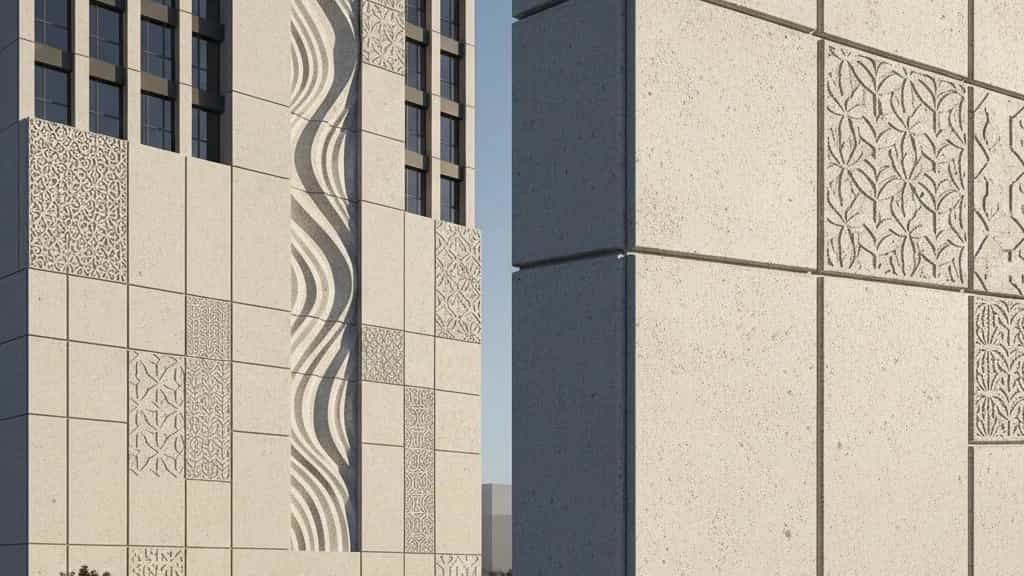
- is a lightweight pre -made concrete that is reinforced with glass fibers.
- is manufactured as a facade panel and attaches to the main structure with steel connections.
- its appearance can be similar to natural stone, concrete, or special 3D designs.
The main components of GFRC
cement matrix (cement, sandy sand, water, additives) AR Glass Fiber Fiber to Increase Stretching Resistance Chemical Additives to Improvement and durability
The benefits of GFRC view
- Lightweight weight (1 to 2 kg/m 2) → Dead load reduction
- High impact resistance, freezing and temperature changes
- The ability to execute complex and decorative designs (classic, modern, 3D)
Year) - Dry and fast installation (Demanitability and Damage)
- Colorability and production capability in a variety of texture and design (like stone, concrete, brick, etc.)
Exterior of Residential, Commercial and Office Buildings Reconstruction of monuments (due to the possibility of decorating and elegant decorations) The interior cover of luxury spaces Municipal elements, pots and urban furniture
Technical specifications (approximate)
- Panel Thickness: 1 to 2 mm
- Weight: about 1-5 kg/m 2 (one -third of natural stone weight)
- Compressive strength: Megapascal
- Bending Resistance: 1-2 MPa
Short comparison with other views
- against stone: Lighter, more flexible in design, but more expensive.
- against Curtainwal: non -transparent appearance (stone), but higher mechanical resistance and lower cost. More luxurious and suitable for architectural facade projects, not just industrial coverage.